
01 The fade
The deal stopped, and no competitor had anything to do with it. No one called to say they'd chosen someone else, because no one had. The thread went quiet, the recurring meeting came off the calendar, and the answer you eventually got was that the timing had shifted.
That isn't a loss the way your pipeline reports it. A loss has a winner. This one has nobody, and the budget that was going to fund it is still sitting there. Whatever beat you is still in the building. Someone inside got nervous, and nothing you sent spoke to what they were nervous about.
Watch what happens next. Nobody marks it lost, because nobody wants to close out a record that still has a budget attached. It gets pushed a quarter, then pushed again, and then it sits in the forecast at thirty percent for eleven months. Meanwhile a rep who stopped believing in it keeps logging a quarterly check-in. Eighteen months later the requirement comes back under a different name, written by someone who has never heard of you, and the whole thing starts again from a cold open. The deal went somewhere you couldn't see and got re-scoped without you.
02 The questions change first
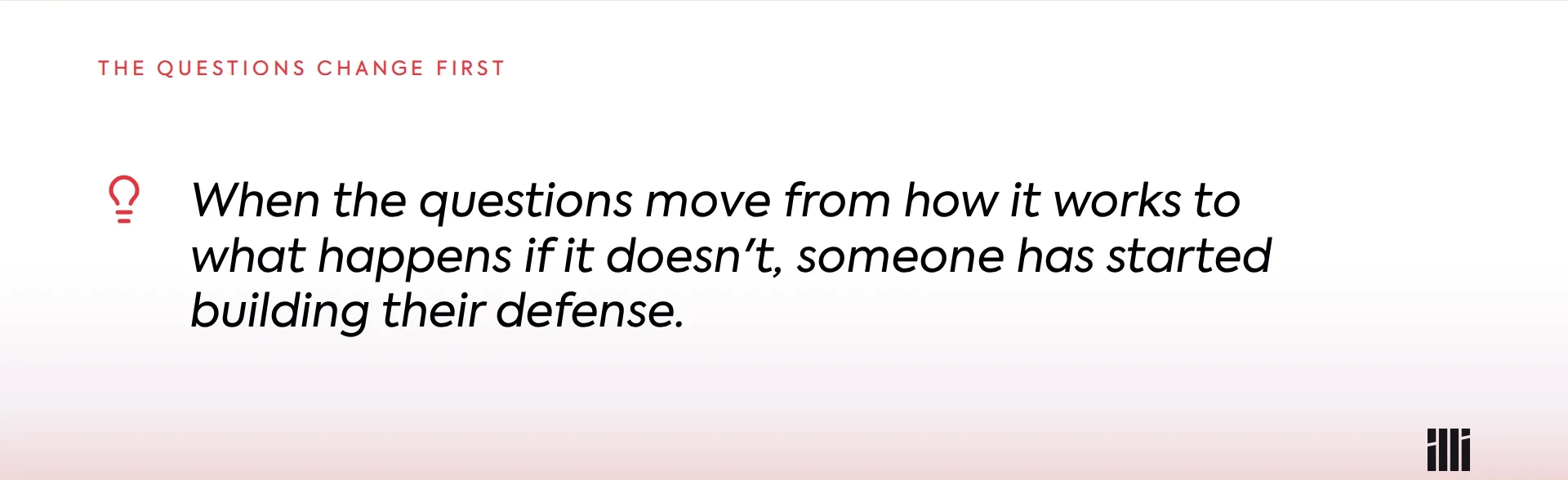
A fade rarely comes out of nowhere. The questions shift weeks before the calendar does, and most teams hear the new questions as progress.
Early on, buyers ask how it works. Later, if the deal is healthy, they ask how fast. When someone starts to worry, the questions turn toward what happens if it doesn't work. Who else has done this? What does the rollback plan look like? Can you put the implementation risk in writing? A reference request, a sudden interest in documentation, a new name from legal or finance copied on the thread: each one looks like diligence. Usually it's a person quietly building the case they'd need if this went wrong.
That's the moment to change what you're sending. Another feature sheet answers a question nobody is asking anymore. What they need is material that makes the choice safe to defend, and they almost never say so.
03 The room you're not in
Your champion is losing an argument you never hear, and that changes what your content is for.
You aren't in the internal review. Your champion is, alone, holding your one page in front of people who each have something different to lose.
- The Operations Guardian is picturing the first month, when a crew she's led for years is learning a new system in the middle of peak season and every late shipment traces back to the day she signed off.
- The Technical Modernizer has engineers who are sure they could build this themselves, and backing an outside vendor means telling his own team they weren't the answer.
- The Business Builder knows this budget came out of a project a peer was fighting for, and that peer will be the first to ask in six months what it bought.
Your champion has to answer all of it from memory, without you.
Most sales material is built for the conversation you're in, and very little is built for the one you're not. If it doesn't hand your champion the specific sentence that answers the specific fear in that room, it won't travel past the person who liked you. The person who liked you isn't the one who kills the deal.
04 The proof
Between forty and sixty percent of B2B deals end in no decision, with no competitor involved at all.
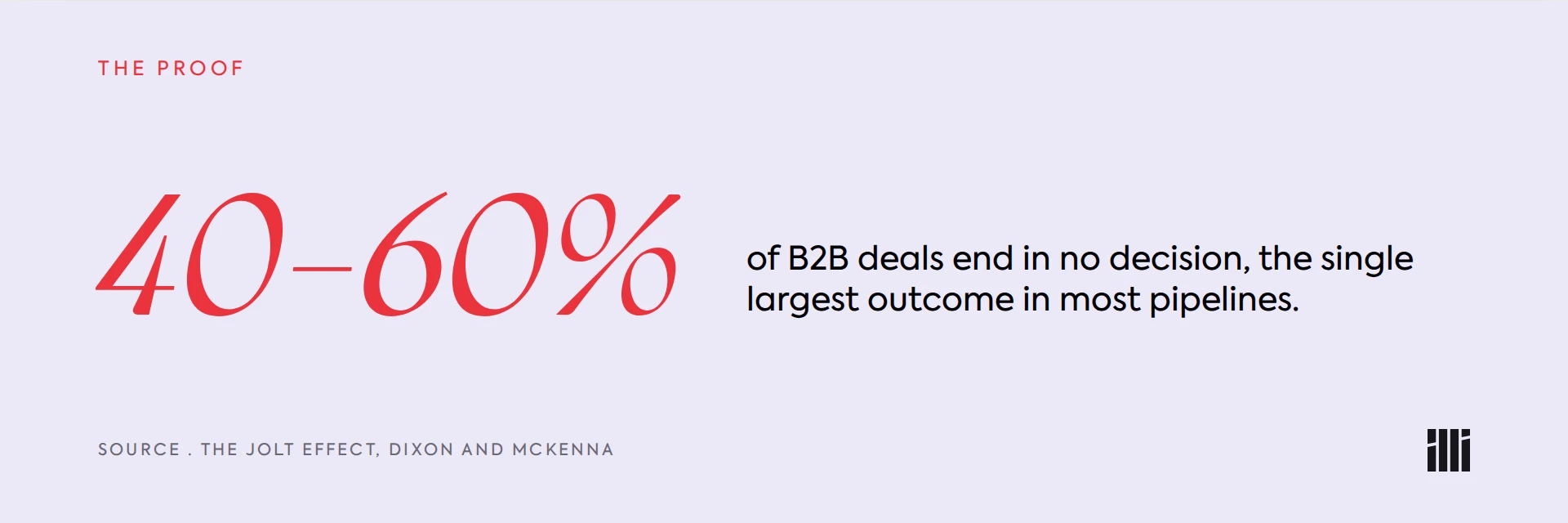
That number is almost certainly low, because no decision is the one outcome nobody has a reason to record. A competitive loss gets logged, reviewed, and learned from. A stall gets logged as timing or budget cycle, or left open so the pipeline still looks healthy at the quarterly review. Ask most teams for their no-decision rate and you'll get a shrug, then a number that's far too low, because the deals that fit the definition are all still technically open.
Now look at where the budget goes. Most of it goes to winning a comparison against a named rival, when the most common outcome in the pipeline is a room that couldn't get comfortable enough to move. Teams are optimizing for the fight they can see and losing the one they can't.
It also changes what your win rate is telling you. A team closing thirty percent against competitors can be excellent at the comparison and still lose most of its addressable revenue to rooms that never made a call. A sharper differentiator fixes the first problem. The second only moves when someone finds the person in the room who's afraid and answers what they're afraid of.
05 Monday
Change one question. Instead of asking what the buyer needs to know, ask what they were protecting.
The first question gets you a list of features and a polite nod. The second gets you the reason the last deal stalled, usually in the buyer's own words and usually within ninety seconds. Here's one question from the MMM Interview Guide. Use it as written with five people: deals you won, deals you lost, and the one that went quiet.
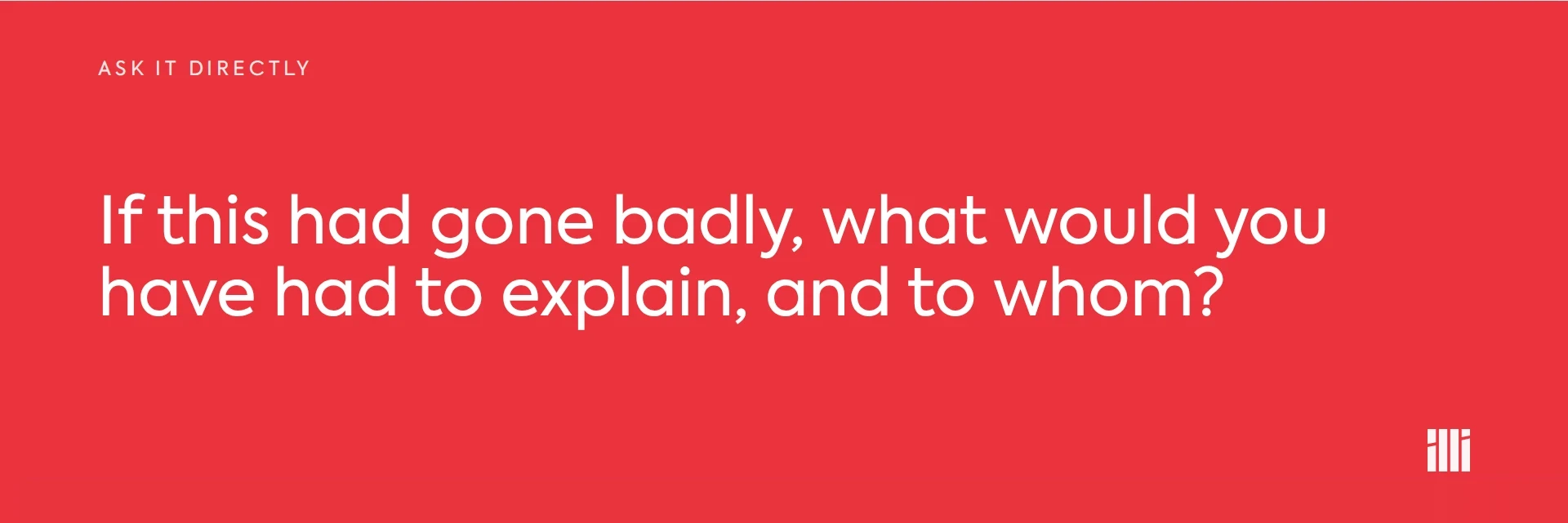
Then stop talking. The pause is the part people get wrong. They fill it, and the answer that would have come at second twelve never arrives. What comes out, instead of a feature request, is a person, a history, and something they didn't want to be blamed for again.
Whatever they tell you they were protecting is your position: the one they handed you, not the one you settled on at the offsite.
That's one question from the guide. The rest is coming with the MMM toolkit, so you can run these interviews yourself.